Botulinum toxin injections: onset, duration and risks
Botulinum toxin type A relaxes the muscle it is injected into, which softens the lines that muscle makes. The US prescribing information describes the first effect 1 to 2 days after injection, rising in intensity through the first week, an effect on frown lines of about 3 to 4 months, and no evaluation of dosing more often than every 3 months. It is a prescription only medicine in the UK and in most European countries, so a prescriber has to assess your face before anyone injects you.
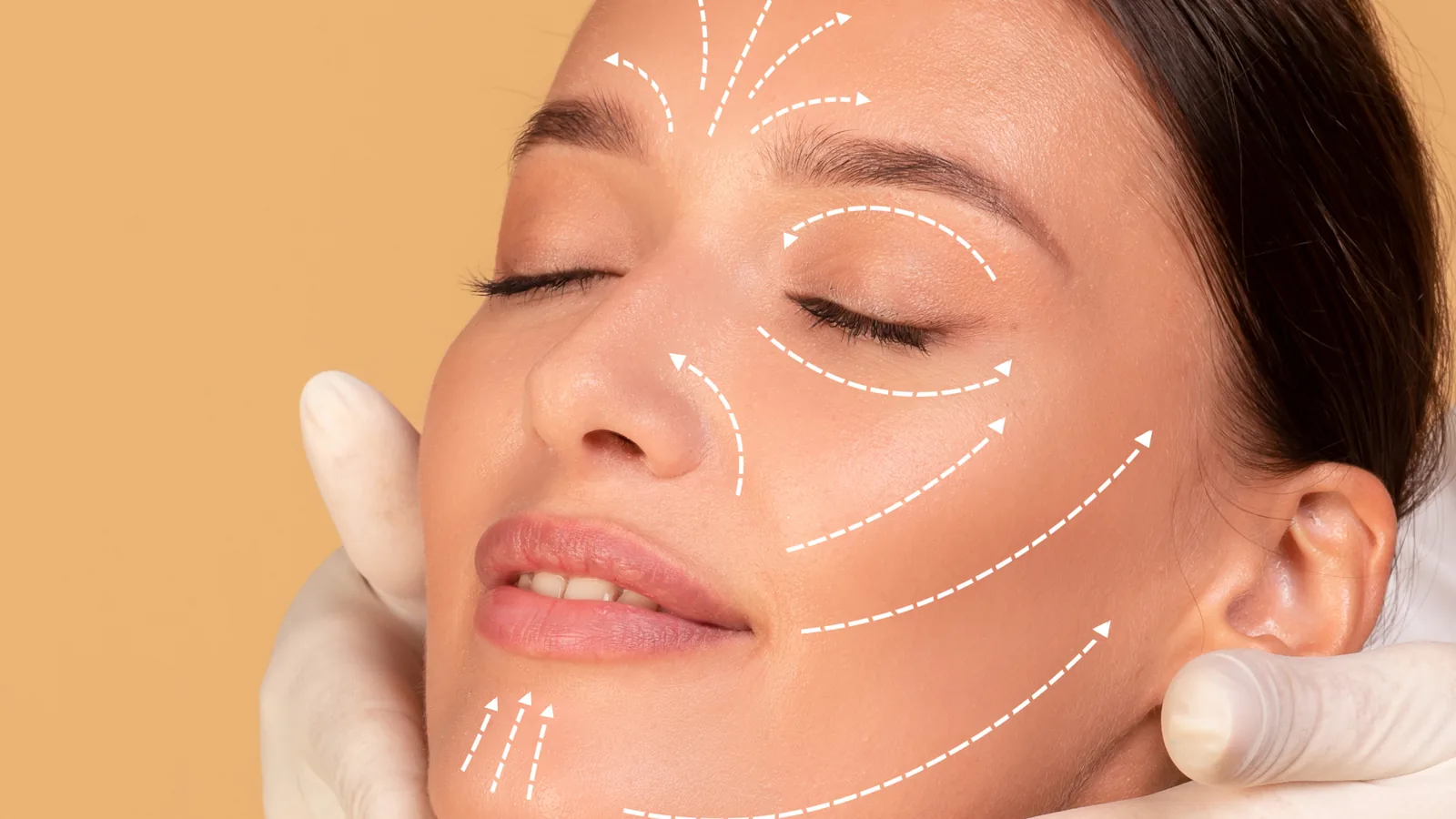
How fast it works and how long it lasts
The toxin blocks the signal that tells a muscle to contract, so the skin folded by that muscle creases less. The prescribing information puts chemical denervation of the injected muscle at 1 to 2 days after injection, increasing in intensity during the first week. That is why a review at around 2 weeks tells you more than a look in the mirror on day 3. Nothing is placed under the line itself, which is the job of a hyaluronic acid filler, so a crease already etched into resting skin will soften rather than vanish.
Duration of effect on the glabellar lines, the vertical frown lines between the brows, is given as approximately 3 to 4 months. The same label describes 2 randomised, double blind, placebo controlled trials of identical design with 405 treated patients and 132 on placebo, in which severity was reduced for up to 120 days. At day 30, investigators rated the lines none or mild in 325 of 405 treated patients (80 percent) against 4 of 132 (3 percent) on placebo, and 362 of 405 patients (89 percent) rated their own lines at least moderately improved against 9 of 132 (7 percent).
Read those figures as one product at one dose in a selected trial population, not as a forecast for your face. Duration moves with the dose, the bulk of the muscle and the area treated, and your own number of weeks cannot be predicted in advance. Before and after photographs shot under 2 different lights are not evidence, and any practitioner who states a fixed number of months is going beyond the data.
| Stage | Typical timing | What it means |
|---|---|---|
| Muscle starts to relax | 1 to 2 days | Effect increases in intensity through the first week |
| Result worth judging | About 2 weeks | Reviews and any correction are usually done at this point |
| Trial assessment point | Day 30 | Investigators rated 80 percent none or mild, patients 89 percent improved |
| Effect on frown lines fades | About 3 to 4 months | Movement returns gradually rather than all at once |
| Earliest evaluated repeat | Every 3 months | More frequent dosing has not been clinically evaluated |
| Warning signs of distant spread | Hours to 4 weeks, usually 4 to 8 days | Swallowing, breathing, speech or vision changes need emergency care |
Dose, areas and how often it is repeated
The cosmetic doses in the US label for one preparation are worth knowing before you sit down. For frown lines it gives 4 Units into each of 5 sites, 20 Units in total. For crow's feet it gives 4 Units into 3 sites per side, 6 injection points and 24 Units in total. For forehead lines it gives 20 Units into the forehead muscle plus 20 Units into the frown area, 40 Units in total, because relaxing the forehead on its own can leave the brow sitting heavy.
Dosing more often than every 3 months has not been clinically evaluated, so 3 months is a floor rather than a target. Units are not interchangeable between preparations, since each product has its own potency assay, so a price per Unit tells you nothing until you know which product is in the syringe. Ask for the dose and the number of sites to be written on your record.
Some areas sit outside the cosmetic licence of the product in front of you, for example the jaw muscles, a gummy smile or the chin. Those are treated on the prescriber's judgement, which is lawful but shifts more of the risk onto their experience. Ask what happens if the result is uneven at 2 weeks, because a correction is another dose rather than a free adjustment.
Side effects and the risk that matters most
In the registration trials the common problems were local and temporary. Eyelid drooping was reported in 3 percent of patients treated for frown lines, brow drooping in 2 percent of those treated for forehead lines, headache in 9 percent of the forehead group against 5 percent on placebo, and eyelid swelling in 1 percent of the crow's feet group. Small bumps at the 5 or 6 injection points, tenderness and bruising are common on the day, and a drooping lid fades as the effect wears off.
The serious risk is the toxin acting beyond the muscle it was placed in. The label carries a boxed warning that effects may spread to produce symptoms consistent with botulinum toxin effects hours to weeks after injection, that swallowing and breathing difficulties can be life threatening and that deaths have been reported. UK regulators updated the product warnings in July 2026 after cases of iatrogenic botulism, noting that symptoms typically start between 4 and 8 days after treatment and can take up to 4 weeks to develop, with risk rising with high doses, use of a product outside its licence or into unapproved sites, underlying disorders that predispose a patient to them, and counterfeit or unauthorised products.
North east England showed what that looks like. In 2025, 25 botulism cases were identified with symptom onset between 18 May and 9 June, 21 of them after injections by 2 independent practitioners. The product was an unlicensed import that tested at 370 Units per vial against the 200 Units stated on its packaging, 85 percent more than the label claimed. Median time from injection to first symptom was 4 days, 16 patients (64 percent) were admitted to hospital and 16 (64 percent) received botulism antitoxin. Blurred vision and fatigue affected 92 percent, difficulty swallowing and drooping eyelids 88 percent.
| Area | Total dose | How it is divided |
|---|---|---|
| Frown lines between the brows | 20 Units | 4 Units into each of 5 sites |
| Crow's feet, both sides | 24 Units | 4 Units into 3 sites per side, 6 points in all |
| Forehead lines | 40 Units | 20 Units to the forehead muscle plus 20 Units to the frown area |
| Any repeat treatment | Same dose range | Not evaluated more often than every 3 months |
Who should not have it
The label lists 2 contraindications: known hypersensitivity to any botulinum toxin preparation or to any component of the formulation, and infection at the proposed injection site. A cold sore, an inflamed follicle or broken skin over the target muscle is a reason to rebook rather than to press on.
People with neuromuscular disorders may be at increased risk of generalised muscle weakness, double vision, drooping eyelids, altered speech, severe swallowing problems and breathing difficulty. The label names myasthenia gravis, Lambert-Eaton syndrome, amyotrophic lateral sclerosis and peripheral motor neuropathies, and it asks for caution if your swallowing or breathing is already compromised. Aminoglycoside antibiotics and other agents that interfere with neuromuscular transmission can potentiate the toxin, so hand over a full list of your medicines instead of the 2 or 3 you assume matter. Medicines that thin the blood make bruising at the injection points more likely, so name them at the consultation and never stop a prescribed one on your own.
If you are pregnant or breastfeeding, skip it. There are no studies or adequate postmarketing data on developmental risk in pregnancy and no data on the toxin in human milk, while animal studies showed reduced foetal body weight and decreased skeletal ossification at higher doses. Under 18s are a matter of law rather than judgement: since 1 October 2021 it has been a criminal offence in England to inject botulinum toxin for a cosmetic purpose into anyone under 18, or to arrange or book it, and a parent cannot consent on the child's behalf. Registered doctors, nurses, dentists and pharmacists may still treat an under 18 where a doctor has approved the treatment.
Choosing a qualified, registered practitioner
Because this is a prescription only medicine in the UK and in most European countries, 2 questions decide the safety of the appointment: who is the prescriber, and who holds the needle. NHS advice is to check both, and a prescriber who has never seen your face is a reason to walk out. A consultation that ends with an injection 10 minutes later, with no cooling off period and no written record of product and dose, is not a consultation.
Check the register that fits the person rather than the clinic's own wording. Doctors are on the General Medical Council register, nurses on the Nursing and Midwifery Council register and dentists on the General Dental Council register. Care Quality Commission registration covers independent clinics in England that provide cosmetic surgery, so a clinic that only injects may not be listed there. For non surgical treatments the NHS points instead to the voluntary registers accredited by the Professional Standards Authority, the Joint Council for Cosmetic Practitioners and Save Face. Ask how many of these procedures the injector has done, what training they hold and who answers the phone at 9pm on a Sunday.
Then ask what is in the syringe. Regulators advise checking that your practitioner uses a product licensed in your country, and the 2025 outbreak turned on an unlicensed import. Ask to see the box, ask where it was bought, and treat a price far below every other quote, a treatment offered at a party or a mobile service with the same caution. Our checklist on how to choose an aesthetic practitioner and the Consultation Checklist work through the same questions one by one.
What to settle before you book
- Ask who the prescriber is and insist on an assessment in person before any prescription is written.
- Check the prescriber and the injector on the professional register that fits each of them, and on a voluntary register accredited by the Professional Standards Authority.
- Ask which product will be used, whether it is licensed in your country and whether your area is a licensed indication.
- Get the dose in Units and the number of injection sites written on your record, so the next visit starts from a figure.
- Agree who reviews you at 2 weeks and who you contact out of hours if swallowing, breathing or vision changes.
Frequently asked
How long before I see anything?
The injected muscle begins to relax 1 to 2 days after treatment and the effect builds through the first week. Judge the result at about 2 weeks rather than on day 3.
How long does it last?
The US label gives approximately 3 to 4 months for frown lines, and repeat dosing has not been evaluated more often than every 3 months. Your own duration depends on the dose, the muscle and the area treated.
Can I have it while pregnant or breastfeeding?
No. There are no adequate human data on developmental risk in pregnancy and no data on the toxin in human milk, so treatment is deferred until afterwards.
What should make me seek urgent care?
Difficulty swallowing, breathing or speaking, drooping eyelids, blurred vision or weakness spreading beyond the treated area. Onset has been reported from hours to weeks after injection, usually 4 to 8 days and up to 4 weeks later, and it is an emergency.
Is it legal for someone under 18?
Not for cosmetic reasons in England. Since 1 October 2021 it has been a criminal offence to inject botulinum toxin for a cosmetic purpose into anyone under 18 or to arrange it, and parental permission makes no difference.
Does it work on every line?
It relaxes muscles, so it works on lines made by movement, such as frown lines and crow's feet. A crease that is clearly visible when your face is completely still is usually treated by other means.
Sources
- onabotulinumtoxinA cosmetic prescribing information · US label held by the National Library of Medicine; source for the doses in Units, the 1 to 2 day onset, the 3 to 4 month duration, the contraindications, the boxed warning and the trial figures.
- Botulinum toxin type A products: updated warnings regarding risk of iatrogenic botulism · MHRA Drug Safety Update of 15 July 2026; source for the 4 to 8 day symptom window, the 4 week outer limit and the prescription only status in the UK.
- A local outbreak of iatrogenic botulism associated with cosmetic injections of botulinum neurotoxin-containing products, England, 2025 · Eurosurveillance 2025;30(39):2500746 via PubMed Central; source for the 25 cases in north east England, the unlicensed vial that tested at 370 Units against 200 declared, and the 64 percent admission and antitoxin figures.
- Choosing who will do your cosmetic procedure · NHS guidance on registers, prescriber and injector, and the questions to ask; used for the practitioner section.
- Botulinum toxin and cosmetic fillers for under 18s · UK government guidance on the law in force in England since 1 October 2021, including that a parent cannot consent.
Read on
 Aesthetics
Hyaluronic acid fillers: risks, red flags and reversal
Aesthetics
Hyaluronic acid fillers: risks, red flags and reversal
 Aesthetics
How to choose an aesthetic practitioner: the checklist
Aesthetics
How to choose an aesthetic practitioner: the checklist
 Aesthetics
Microneedling: evidence, sessions and downtime
Aesthetics
Microneedling: evidence, sessions and downtimeTools that fit
This guide is for general information. It does not replace advice from a dermatologist, physician or qualified practitioner, or an examination.