Skin undertone: how to find yours and match a foundation
Undertone is the red to yellow axis of skin colour, and it sits across from depth rather than along it: depth is how light or deep skin reads, undertone is the balance of red and yellow inside it. The eye handles one well and the other badly. Judging 120 photographs, single raters agreed on light to dark at an intraclass correlation of 0.85 but on red to yellow at only 0.15 and 0.16 across the 2 rating formats, and in a 2025 clinical comparison 2 independent raters using a 138 swatch skin guide agreed on undertone with a kappa of 0.37 against 0.45 for the depth reading. So test rather than guess: 3 shades striped along the jawline, daylight, a decision after 10 minutes and a second look 6 to 8 hours later.
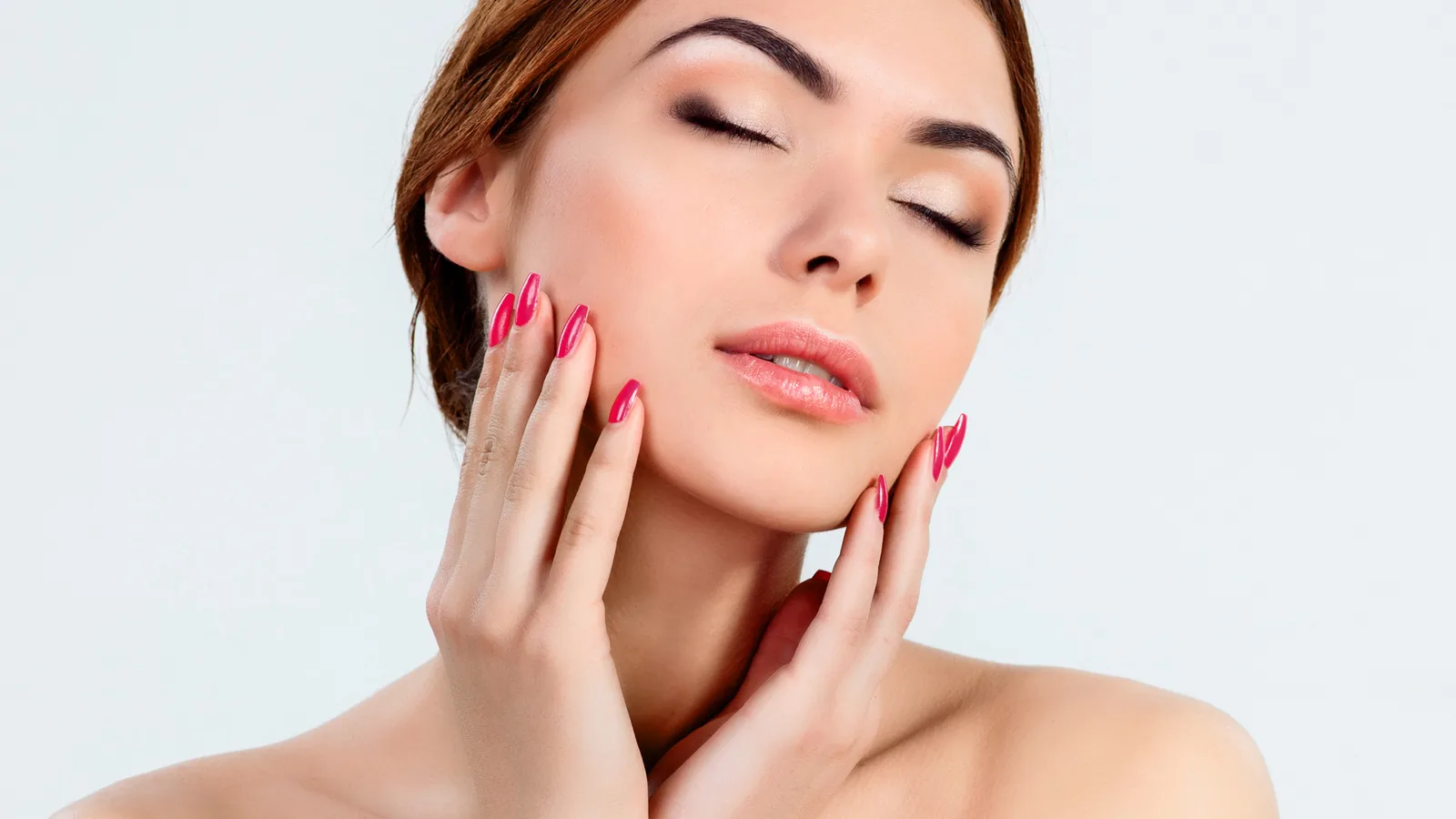
What undertone measures and what depth measures
Colour science describes skin with 3 coordinates. L* is lightness, from 0 for black to 100 for white, a* the green to red axis, b* the blue to yellow axis. Depth comes out of L*, and dermatology compresses L* and b* into one figure, the individual typology angle, whose 6 bands run very light above 55 degrees, light 41 to 55, intermediate 28 to 41, tan 10 to 28, brown minus 30 to 10, and dark below minus 30. Those band edges came from over 35,000 readings in people of European ancestry alone, so they are a working scale, not a universal one.
Undertone runs in the other direction, as the ratio of red to yellow, usually written as a hue angle. Three pigments produce it: skin colour is set mainly by epidermal melanin, with a minor contribution from carotenoids and from haemoglobin in the dermal capillaries. Melanin sets depth, haemoglobin shows up as redness on the a* axis, and carotenoids push yellowness. That last pigment answers to diet: in 35 students followed for 6 weeks, each extra daily portion of fruit and vegetables was associated with about 0.47 delta E over the whole skin and 0.46 on the face, at 6 weeks but not at 3. That was observational, not a controlled trial.
Two consequences follow. Two people in one depth band can need different foundations, and your own depth can move while the family you match against stays put. A colour change arriving over days rather than seasons is a medical question: yellowing of the whites of the eyes, a grey cast or a spreading patch belongs with a doctor.
| What is being read | What it describes | How it is measured | The number behind it |
|---|---|---|---|
| Depth | How light or deep the skin reads | Lightness, compressed with yellowness into the individual typology angle | 6 bands, from above 55 degrees to below minus 30 |
| Undertone | The balance of red and yellow at that depth | The green to red axis against the blue to yellow axis, as a hue angle | Across 32 foundation shades, hue angle 47.0 to 77.5 degrees |
| Phototype | How the skin responds to ultraviolet, not its colour | A questionnaire on burning and tanning, 6 types | Only 2 in 3 people self-report the same type on retest |
| Instrument reading | The reference the eye is judged against | Colorimeter, 3 repeat readings per site | Repeatability at an intraclass correlation of 0.98 |
| Eye judgement of depth | Light to dark from a photograph | One untrained rater against a swatch grid | Intraclass correlation 0.85 for a single rater |
| Eye judgement of undertone | Red to yellow from a photograph | One untrained rater against a swatch grid | Intraclass correlation 0.15 and 0.16, reaching 0.95 only over 123 raters |
| Two independent raters in clinic | Agreement using a 138 swatch skin guide | Weighted kappa across 1,329 skin sites | 0.37 for undertone against 0.45 for pigment |
Why a tan moves depth and not family
Tanning is a melanin event, and a smaller one than it looks. After a single minimal erythema dose in volunteers of European, Asian and African origin, melanin content was not statistically higher a week later; it had mostly been redistributed through the epidermal layers. After 3 weeks of repeated exposure in phototypes 2 and 3, melanin rose only slightly while visible tanning increased fivefold.
Exposure to 45 to 50 joules per square centimetre of UVA1, in volunteers whose starting typology angle ran from 13 degrees down to minus 50, produced a similar change of about 16 to 18 degrees whatever the original colour, by darkening melanin already present rather than building new pigment. The middle bands of that scale are 13 to 18 degrees wide, so a tan of that size moves you about one band down, and leaves the red to yellow balance underneath alone. In late summer the honest correction is the same family one step deeper, and a sunscreen filter that leaves a white cast confuses the judgement too.
Phototype is a third thing again, and not a colour scale. The 6 Fitzpatrick types were designed to categorise photosensitivity and do not measure skin tone. Self reporting is unstable: on repeat questioning months later, only 2 in 3 people placed themselves in the same type. In a 2025 study of 64 participants and 1,329 skin sites, phototype clustered worst of all the scales against instrument readings, while the instrument itself repeated at an intraclass correlation of 0.98. It is not a reading of ancestry either: skin tone and race are routinely conflated, and no ethnic background places anyone on the red to yellow axis. Phototype still matters for laser settings. It has nothing useful to say about foundation.
The vein test, the jewellery test and what the eye can do
The vein test says blue veins mean cool and green veins warm; the jewellery test says silver flattering means cool, gold warm. Neither has been tested against a colour measurement in a published study, so each is a rule of thumb rather than a diagnostic.
The published work points at the weakness. In a 2024 study of 120 photographs, ratings on a red to yellow grid tracked the yellowness measured off those photographs at r of 0.64 and 0.54 across the 2 rating formats, but tracked measured redness at minus 0.09 and minus 0.19. Both sit near zero, and the minus sign is the direction the scale predicts, since yellower means less red. Untrained single raters agreed on the red to yellow axis at an intraclass correlation of 0.15 and 0.16, against 0.85 for light to dark, and only by averaging the 123 and 126 raters behind each estimate did undertone reach 0.95. That red axis is what the vein test claims to read off a wrist.
A second trap sits in the same data. At the lightest and darkest levels of lightness, measured redness and yellowness are held to lower values, while in the middle they cover nearly the full spread. Undertone varies most in the middle of the depth scale, and what you see through a wrist is filtered by the melanin above the vessel.
Seasonal colour analysis belongs in the same category. Sorting people into spring, summer, autumn and winter is a styling vocabulary with no published validation behind it. It can be a workable way to choose a scarf. It is not a measurement, and it should not overrule a stripe on your jaw.
| Shade group | Lightness of the shade | Direction over 8 hours | What it means for the test |
|---|---|---|---|
| Lightest | 78 or above | Lightness falls, redness rises | One shade fell 8.16 units, from 81.37 to 73.21 |
| Medium light | 66 to 78 | Lightness falls, redness rises, yellowness falls | Shades 3 and 4 of each range sit here |
| Medium | 50 to 66 | Lightness, redness and yellowness all fall | Shades 5 and 6 moved most of all, so judge them late |
| Deep | Below 50 | Lightness holds, redness and yellowness fall | Shades 7 and 8 changed least in lightness |
| All 32 shades | 34.1 to 86.5 | Colour difference intensifies over 8 hours | 1.0 is just noticeable, above 3.0 is easily noticeable |
Olive skin and the shade ladder
Olive skin carries plenty of yellow and comparatively little red, sometimes with a faint green cast, because the a* axis runs towards green at its negative end. The usual vocabulary files that under warm, next to peach and gold. The half that decides whether a foundation reads pink is the red value, the reading the eye gets wrong.
The rest is how ranges are built. Foundation colour comes from red, black and yellow iron oxides whose proportions set each shade, with titanium dioxide for opacity. In a 2025 measurement of 32 shades from 4 global ranges, the hue angle of the lightest shade of each range sat between 64.0 and 75.6 degrees and the deepest between 48.3 and 50.7. Redness climbed through the middle of every ladder: 5.9 to 9.0 in the lightest shades, 12.6 to 18.0 in the fifth to seventh, then back to 10.4 to 12.4 in the deepest.
A range is a line, not a grid: choose a depth and you inherit that range's hue at that depth. If your own hue sits above the line, more yellow and less red, the shade sold to you is close to the reddest point in the ladder and reads pink on the jaw. That is a structural mismatch, not a personal failing, and the common repair, going a shade lighter, adds a second error. The fix is a range offering more than one hue at your depth, or 2 neighbouring shades mixed.
A matching method that survives to the evening
Stripe 3 candidate shades side by side along the jawline, each crossing onto the neck, and leave them for 10 minutes while the film sets, a practical wait rather than a measured threshold. Judge at a window: the shade figures below were measured under a lamp matched to standard daylight, and a match made under one light can separate under another.
Then there is the rest of the day. In that 2025 study the foundations were spread on an opacity chart to a thickness of 200 micrometres and measured at 0, 2, 4, 6 and 8 hours, and the colour difference intensified over time in every product. A difference of 1.0 is the accepted threshold for a just noticeable change, above 3.0 is easily noticeable. One range held all 8 of its shades below 2.2, most shades of the other 3 passed 3.0, and the lightest shade of one range lost 8.16 lightness units, from 81.37 to 73.21, while the darkest shade of that same range moved 0.95.
Redness rose in the 2 lightest groups and fell in the medium and dark ones, while yellowness fell in the 3 deeper groups. Light shades drift darker and redder, which is how a stripe chosen at minute 0 turns orange by evening. The figures come from a chart rather than a face, so they describe a drying film, not your sebum.
Photograph the stripes in the same light at 10 minutes and again after 6 to 8 hours, and keep the one that vanished at the jaw both times. The Undertone Finder holds the comparison, and our guide on when makeup expires covers the other reason a shade stops matching.
The 10 minute jawline test
- Start on bare skin, with no foundation and no fresh layer of moisturiser under the stripes.
- Stripe 3 candidate shades side by side along the jawline, each crossing onto the neck.
- Stand at a window in daylight, since a match made under one light can separate under another.
- Wait 10 minutes without touching the stripes, then decide which one disappears at the boundary.
- Photograph the jaw in that light, then photograph it again 6 to 8 hours later before you choose.
- Expect light shades to drift darker and redder during those hours and deep shades to hold.
- If every shade at your depth reads pink, the range's hue line does not pass through your skin, so change range rather than depth.
- Re-test in late summer for depth only, one step deeper in the same family.
Frequently asked
Does my undertone change when I tan?
Depth changes, the family does not. Ultraviolet A exposure of 45 to 50 joules per square centimetre darkened melanin already in the skin and moved the individual typology angle by about 16 to 18 degrees whatever the starting colour, which is roughly one band on a scale whose middle bands are 13 to 18 degrees wide, so the correction in late summer is the same shade family one step deeper.
Is the vein test accurate?
It has never been tested against a colour measurement in a published study, so it is a heuristic rather than a method. The measured weakness is specific: red to yellow ratings of photographs tracked the measured redness of those photographs at minus 0.09 and minus 0.19, near zero, while they tracked measured yellowness at 0.64 and 0.54.
What does olive undertone mean?
It describes skin with a good deal of yellow and comparatively little red, sometimes with a faint green cast, because the red axis of the colour space runs towards green at its negative end. It is a position on the hue axis at any depth, not a depth of its own.
Why does foundation always look pink on me?
Shade ranges tie hue to depth. In 32 shades from 4 ranges the redness value climbed from 5.9 to 9.0 in the lightest shades to 12.6 to 18.0 in the fifth to seventh, so yellower skin matched at a middle depth is handed the reddest part of the ladder.
Is my Fitzpatrick type the same as my undertone?
No. The 6 Fitzpatrick types were designed to categorise photosensitivity and do not measure skin tone, and on repeat questioning only 2 in 3 people put themselves in the same type. It remains useful for laser and light treatment settings.
Why does my foundation look darker by the evening?
Shades keep shifting after application: measured at 0, 2, 4, 6 and 8 hours, the colour difference intensified over time, with one light shade losing 8.16 lightness units. The popular explanation of oxidation is not established, since the iron oxides and titanium dioxide involved are already in stable oxidised forms.
Sources
- Clinical and biological characterization of skin pigmentation diversity and its consequences on UV impact, International Journal of Molecular Sciences, 2018 · Del Bino, Duval and Bernerd. Source of the statement that skin colour is determined mainly by epidermal melanin with a minor contribution from carotenoids and oxygenated and deoxygenated haemoglobin from dermal capillaries, of redness being read on the a* parameter, of the individual typology angle formula and its 6 bands from above 55 degrees to below minus 30, of melanin being redistributed rather than significantly increased one week after a single minimal erythema dose, of melanin rising only slightly over 3 weeks of repeated exposure while visible tanning increased fivefold, of the 16 to 18 degree change after 45 to 50 joules per square centimetre of UVA1 in volunteers from 13 to minus 50 degrees, and of the phototype being subjective, with only 2 in 3 people self-classifying the same way on repeat questioning. The authors work in cosmetics industry research, which is worth knowing when reading the tanning sections.
- Evaluating skin tone scales for dermatologic dataset labeling, a prospective comparative study, npj Digital Medicine, 2025 · Source of the 64 participants and 1,329 skin sites, of the statement that the Fitzpatrick scale was designed to categorise photosensitivity and does not measure skin tone, of the linear weighted kappa of 0.37 for undertone and 0.45 for pigment between 2 independent raters using the 138 swatch skin colour guide, of the kappa of 0.75 for the 10 shade tone scale, of the colorimeter repeatability at an intraclass correlation of 0.98, and of the finding that phototype clustered worst against the instrument readings. The authors also note that the individual typology angle bands were derived from over 35,000 readings in people of European ancestry alone and were not designed for diverse populations, which is why they used the angle as a continuous variable.
- Variation in skin red and yellow undertone, reliability of ratings and relevance for perceived social experiences, Social Psychology Quarterly, 2024 · Source of the 120 photographs, the 385 and 383 raters in the 2 surveys, the intraclass correlations of 0.16 and 0.15 for single raters on the red to yellow axis against 0.85 for light to dark, the rise to 0.95 and above when the 123 and 126 raters behind each estimate are averaged, the correlations of 0.64 and 0.54 between rated and measured yellowness against minus 0.09 and minus 0.19 for redness, and the finding that redness and yellowness are held to lower values at the lightest and darkest levels of lightness while covering nearly the full range in the middle. The raters were an untrained online panel and the colour values were read off the photographs rather than from skin.
- Discoloration of liquid foundation across the shade color diversity, Scientific Reports, 2025 · Source of the 32 shades from 4 global ranges, the measurement on an opacity chart at a thickness of 200 micrometres under a lamp matched to standard daylight at 0, 2, 4, 6 and 8 hours, the lightness and hue angle figures for each shade, the threshold of 1.0 for a just noticeable difference and 3.0 for an easily noticeable one, the range holding all 8 shades below 2.2, the fall of 8.16 lightness units from 81.37 to 73.21 in one light shade against 0.95 in the darkest shade of the same range, the four lightness groups at 78 and above, 66 to 78, 50 to 66 and below 50, the direction of the redness and yellowness changes by lightness group, the composition from red, black and yellow iron oxides, and the statement that the colloquial explanation of oxidation is insufficiently supported because those pigments are already in stable oxidised forms.
- You are what you eat, within-subject increases in fruit and vegetable consumption confer beneficial skin-color changes, PLoS One, 2012 · Whitehead and colleagues. Source of the 35 participants, the 6 week design with measurements at baseline, 3 weeks and 6 weeks, the spectrophotometer measurement, and the finding that one additional daily portion of fruit and vegetables was worth a colour change of 0.47 delta E over all skin and 0.46 on facial skin, measurable at 6 weeks but not at 3. The sample was 35 students aged 18 to 25 and the design was observational, so the figure is an association, not a treatment effect.
Read on
 Beauty
When make-up expires: the open jar symbol and 30 months
Beauty
When make-up expires: the open jar symbol and 30 months
 Ingredients
Mineral or chemical sunscreen filters: how they work
Ingredients
Mineral or chemical sunscreen filters: how they work
 Aesthetics
Laser hair removal: sessions, skin types and results
Aesthetics
Laser hair removal: sessions, skin types and resultsTools that fit
This guide is for general information. It does not replace advice from a dermatologist, physician or qualified practitioner, or an examination.